CRIME
Life on the goldfields was extremely harsh. Crime was common, and there was always a lack of security and policemen. Many goldminers or gold diggers were subject to homicide, robbery or night fossiking. Night fossiking was where a digger would laze around during the day, then when everyone else was asleep, they would creep around the goldfields and steal gold from the rich. Many diggers commited this crime, and few were caught.
DISEASE
Disease was another dangerous factor on the goldfields. Some of these illnesses were pneunomia, influenza, food poisoning and dysentery. Thousands fell victims to these life-threatening diseases and many of these poor people died. Doctors were scarce and charged an extreme amount of money for their services. These doctors "cures" were actually sometimes poisons. More than a few people with a virus or sickness died from the cure, not the disease itself.
LICENCES
Gold diggers were required to have a license to pan or dig for gold on the Australian goldfields. Licenses cost 30 shillings per month, which was more than most prospectors found in gold. Many people could not afford a license, and simply ran and hid when the police or troopers came to inspect licenses.
HOUSING
The initial form of housing was only a tent in the early days of the gold rush. These tents were supported by wooden logs and sticks which prospectors cut from the trees themselves. Later on, when more diggers arrived, people wanted more permanent housing, so wooden and mud houses became common. One of the most popular forms of mud housing was the wattle and daub home. This was made by slapping fresh mud onto a frame of smooth branches known as "wattles". These branches were found on wattle trees. The roofs of these houses were usually iron or bark. Another form of mud housing was the mud brick house. Prospectors created this house by compressing mud and straw into a brick shape, and then stacking bricks on top of one another with fresh mud when the bricks were dry.
An even later form of housing was brick. This was more expensive and took longer to build, but quite a few diggers chose this home when they wanted a permanent shelter on the goldfields.

FOOD
There was a lack of choice of food on the Australian goldfields, as the meals were the same almost every day. Diggers ate damper, which is a type of bread made from water, flour and salt and is cooked over coals. They also ate whatever meat was available, which was purchased daily from the butcher. Prospectors could not leave any food uneaten for more than a day, otherwise it would go rotten, or the endless burden of flies would take it as their victim.
TOOLS
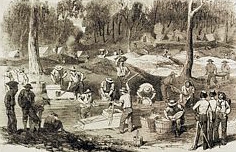
Diggers or prospectors used cradles, shovels, pans and other tools to dig or look for gold. Cradles were used to separate gold from dirt and mud, by filtering apart the substances. Shovels were used to dig holes or dig for gold, whilst pans were used to find gold in rivers, lakes and ponds.
